(980) 447-8034

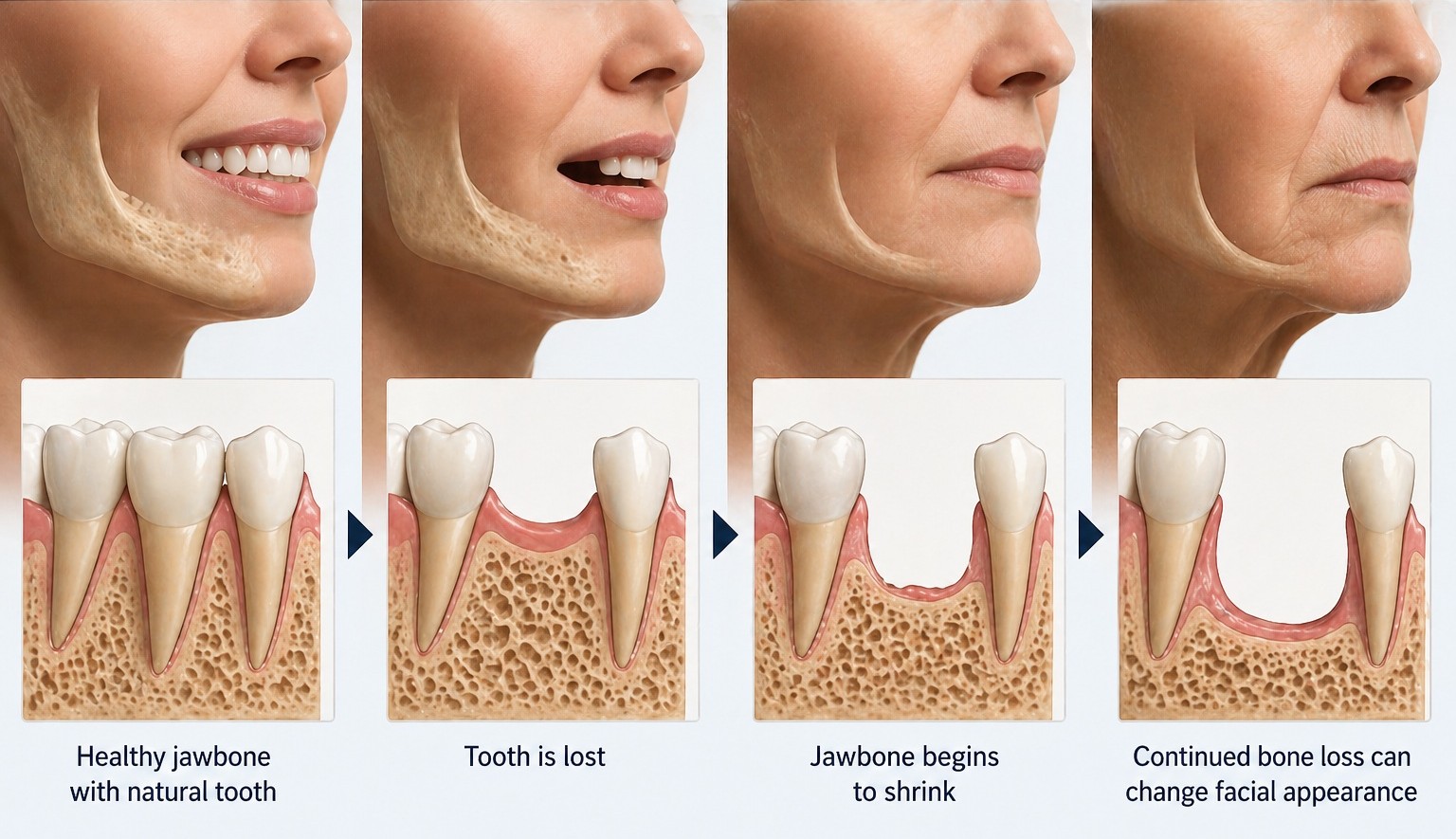
Losing a tooth does more than create a gap in your smile. Over time, it can subtly change how your face looks. Many people first notice it when their cheeks appear slightly sunken, or their jawline loses definition. This change is often called “facial collapse,” and it happens when the jawbone begins to shrink after tooth loss.
Your teeth do more than help you chew. They stimulate the jawbone and keep it strong. Without that stimulation, the bone slowly starts to break down. This process can begin sooner than most people expect.
In this guide, we will look at how different tooth replacement options affect your jawbone. You will understand why some solutions support long-term facial structure while others do not.
What Happens to Your Jawbone After Tooth Loss
Your jawbone depends on daily stimulation from tooth roots. Every time you chew, small forces travel through the roots into the bone. This keeps the bone active and healthy.
When a tooth is lost, that stimulation stops. The body responds by reducing bone density in that area, a process known as resorption. This change can begin within a few months.
As the bone shrinks, you may notice:
- Sunken cheeks: The face starts to look less full
- Thinner lips: Reduced support around the mouth
- Changes in jawline: Less definition over time
This is not just a cosmetic issue. Bone loss can affect how your remaining teeth align and how your bite functions. Over time, it can make future dental treatments more complex.
Understanding Facial Collapse and Why It Matters
Facial collapse refers to the gradual loss of facial support caused by jawbone shrinkage. It is both a structural and aesthetic concern.
Structurally, the jawbone forms the foundation for your teeth and facial muscles. When it weakens, it can disrupt bite alignment and lead to uneven pressure on remaining teeth.
Cosmetically, the changes can make the face appear older than it is. The lower part of the face may look shorter, and the skin may appear less supported.
This can affect:
- Bite alignment: Leading to discomfort or uneven wear
- Speech clarity: Subtle changes in pronunciation
- Confidence: A noticeable shift in facial appearance
Taking early action helps preserve both function and appearance.
How Traditional Bridges Work
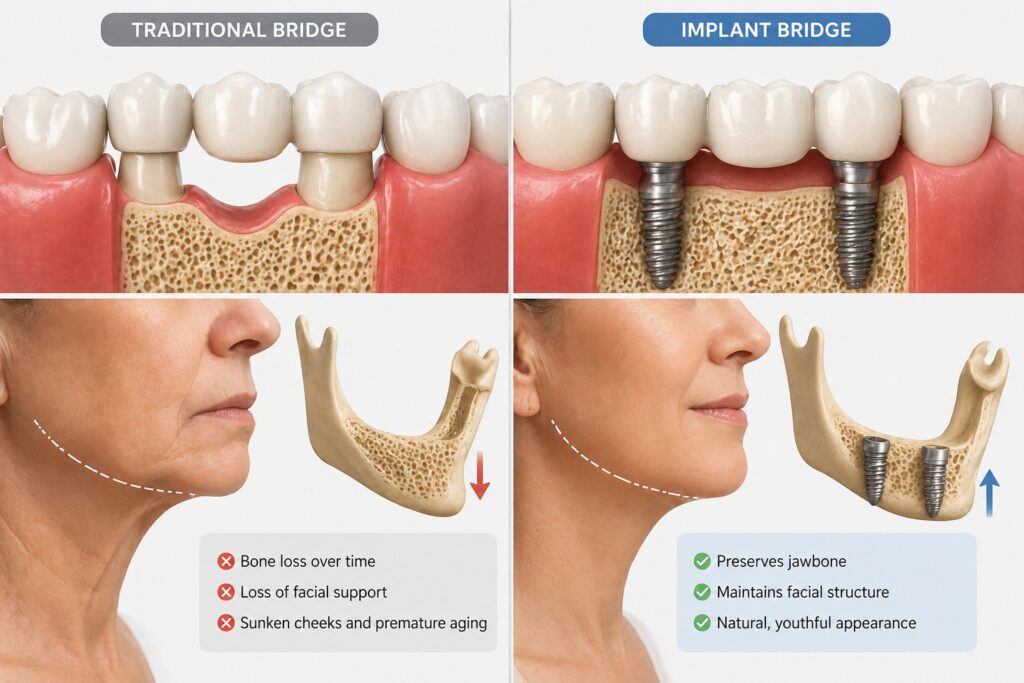
Traditional bridges replace missing teeth but do not address bone health.
They rely on adjacent natural teeth for support. These neighboring teeth are reshaped to hold crowns, which anchor the bridge in place. The replacement tooth sits above the gumline.
Key characteristics include:
- Support from nearby teeth: No direct connection to the jawbone
- Tooth alteration required: Healthy teeth must be reshaped
- Surface-level replacement: Does not extend into the bone
While this method restores appearance and basic function, it has limitations. The jawbone beneath the missing tooth remains unstimulated. As a result, bone loss continues over time.
Additionally, placing extra stress on neighboring teeth may affect their long-term health.
How Implant Bridges Work Differently
Implant bridges replace both the visible tooth and its root function.
Small titanium posts are placed into the jawbone where the missing teeth were. Implant bridges in Moorseville act like artificial roots. Once healed, a bridge is attached to these implants.
This approach provides:
- Direct anchoring in the bone: Mimics natural tooth structure
- Load-bearing function: Transfers chewing forces into the jaw
- Independence from adjacent teeth: No reshaping required
Because the implant integrates with the bone, it creates continuous stimulation during daily activities like eating and speaking.
At practices like Lumora Implant Dentistry, this method is often used to restore multiple missing teeth while maintaining long-term bone health. The result feels stable and functions more like natural teeth.
Why Implant Bridges Help Prevent Facial Collapse
Implant bridges replace both the visible tooth and its root function. This approach focuses on restoring how your teeth look and how they function beneath the surface.
- Anchored into the jawbone: Small titanium posts are placed into the jaw, creating a stable base for the bridge.
- Mimics natural tooth roots: These implants act like real roots, allowing the jawbone to stay active and supported.
- Provides stability and load-bearing function: Chewing forces are evenly distributed, which helps maintain strength in the jaw.
- Does not rely on adjacent teeth: Nearby teeth remain untouched, preserving their natural structure.
Because the implant integrates with the bone, it creates a strong and lasting connection. This allows the restoration to feel secure during daily activities like eating and speaking. Over time, this connection helps maintain bone health and reduces the risk of changes in facial structure.
Key Differences: Implant Bridges vs Traditional Bridges
When comparing these two options, the differences go beyond appearance. Traditional bridges focus on replacing the visible portion of the tooth. They restore your smile quickly, but they do not interact with the jawbone. Over time, this allows bone loss to continue beneath the surface.
In contrast, implant bridges integrate with the jawbone. This creates a functional connection that supports both chewing and bone preservation. Because they do not rely on adjacent teeth, implant bridges in Mooresville also help maintain the integrity of surrounding structures.
Another important factor is longevity. Traditional bridges may need replacement over time due to wear or stress on supporting teeth. Implant-supported restorations are designed for long-term use, with proper care.
Overall, one approach fills a gap, while the other restores both structure and function.
Who Should Consider Implant Bridges
This option may be suitable for:
- Individuals missing one or multiple teeth
- Those noticing changes in facial shape
- Patients with sufficient bone or candidates for grafting
- People seeking a long-term solution
It is especially helpful for those who want to maintain both oral function and facial appearance over time.
When Traditional Bridges May Still Be Used
There are situations where a traditional bridge remains appropriate.
These include:
- Medical conditions that limit surgical procedures
- Insufficient bone where grafting is not preferred
- Preference for a non-surgical option
- Cases where treatment needs to be completed quickly
While it may not prevent bone loss, it can still restore function and appearance in the short term.
Long-Term Impact on Appearance and Oral Health
Over a period of 5 to 10 years, the differences become more noticeable.
With traditional bridges, bone loss may continue, leading to changes in facial symmetry and bite function. Maintenance may also increase as supporting teeth experience stress.
With implant bridges, bone stability is maintained. This helps preserve facial structure and supports consistent bite function. Maintenance is often more predictable when oral hygiene is maintained.
The long-term outcome depends on how well the restoration supports the underlying bone.
Early Action Can Preserve Your Facial Structure
Delaying tooth replacement can accelerate bone loss. The longer the jawbone goes without stimulation, the more it shrinks.
Taking early action helps:
- Preserve existing bone
- Simplify future treatment
- Maintain facial balance
A preventive approach often leads to better long-term outcomes compared to corrective treatment after significant bone loss has occurred.
Tooth replacement is not only about restoring your smile. It also plays a key role in maintaining the structure of your face. When the jawbone is supported, your facial appearance remains more stable over time.
Understanding how different options affect bone health can help you make informed decisions. While traditional bridges restore visible gaps, implant bridges provide deeper structural support.
By focusing on both function and bone preservation, you can protect your long-term oral health and facial appearance. Choosing the right approach today can make a meaningful difference in how your smile looks and feels in the years ahead.
People Also Ask
How quickly does jawbone loss begin after losing a tooth?
Bone loss can begin within a few months after tooth loss. The process continues gradually if the area is not restored.
Are implant bridges suitable for multiple missing teeth?
Yes, they are commonly used to replace several missing teeth while providing stability and support to the jaw.
Will implant bridges affect nearby teeth?
No, they do not rely on adjacent teeth for support, so surrounding teeth remain unchanged.
Can implant bridges improve facial appearance?
Yes, by maintaining jawbone structure, they help preserve natural facial contours and prevent a sunken look.
How do implant-supported restorations help maintain bone health?
They act like natural tooth roots and transfer chewing forces into the jaw, helping preserve bone density over time.
Related Articles
Complimentary 3D Xray and Consultation - Book Online
Shape your final smile for bite, feel and look—down to shade and shape—and even test-drive it first. Fully optimized. Fully you.
