Find Us

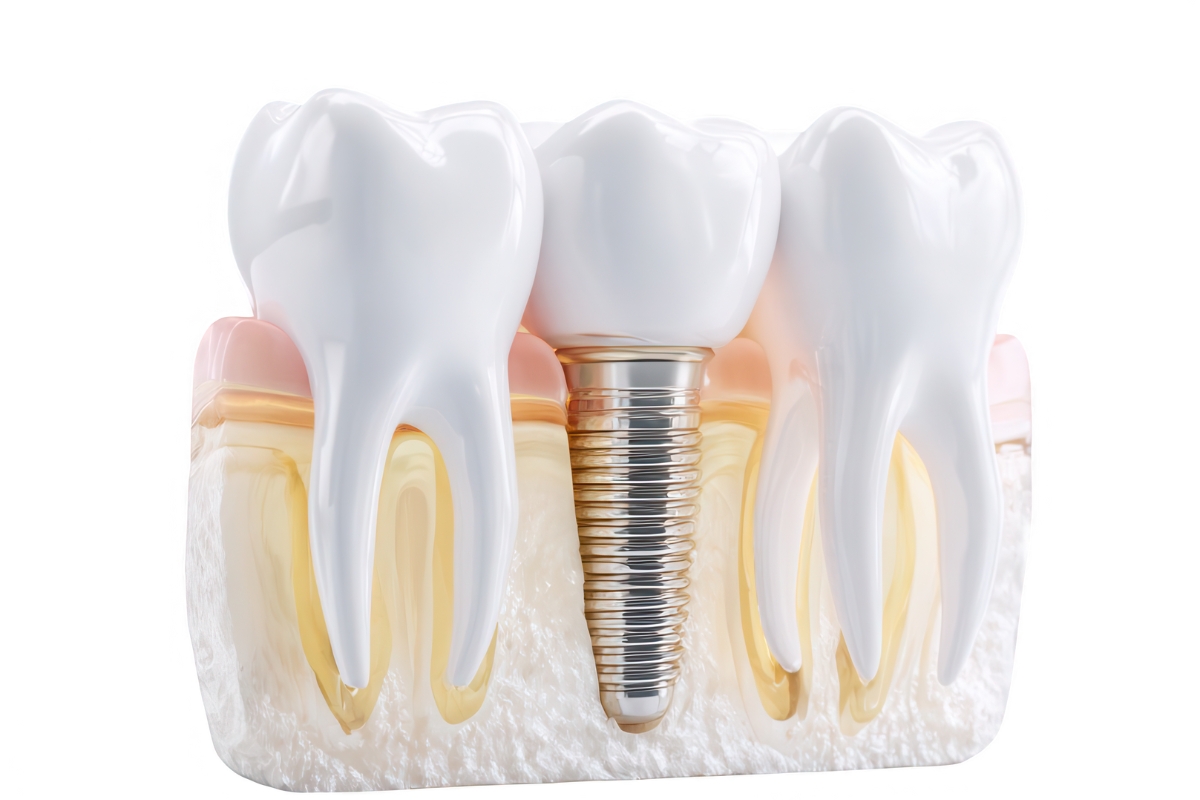
Losing a tooth can have more effects on your oral health than just a gap in your smile. Over time, the bone that once supported your tooth begins to deteriorate. This can lead to changes in your facial appearance and even impact surrounding teeth. Thankfully, modern dentistry offers solutions such as single-tooth implants and dental bridges that can restore both function and appearance.
When it comes to preserving your oral health after tooth loss, it’s crucial to choose the right treatment. A single-tooth implant is often considered a more long-term and effective solution for preventing bone loss than traditional bridges. But how exactly does an implant stack up, and is it the right choice for you?
What Happens to the Jawbone After Tooth Loss?
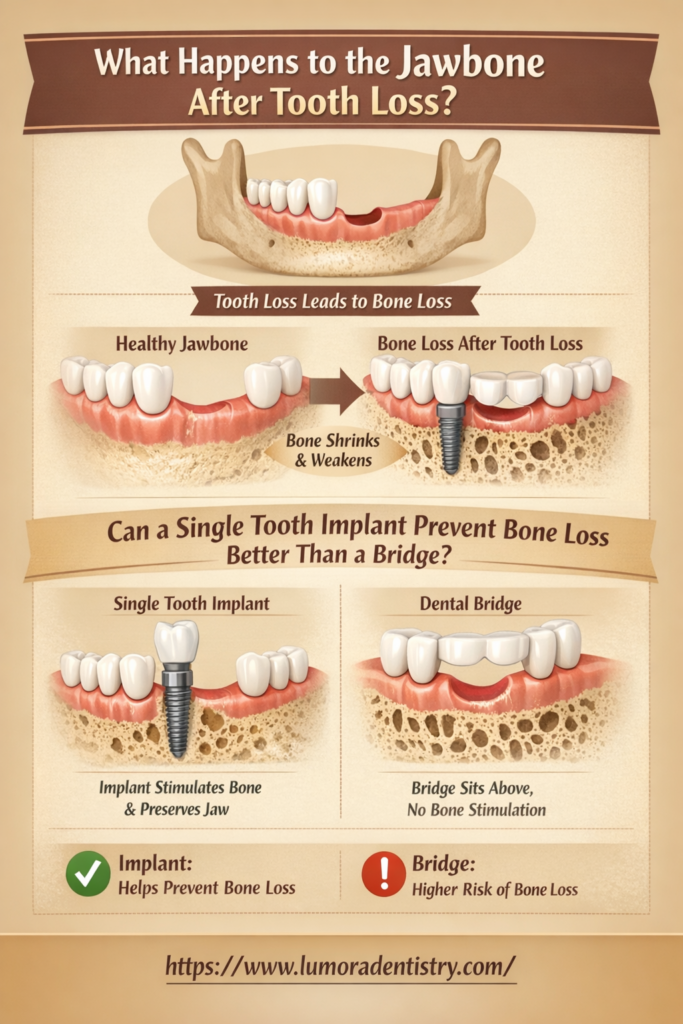
Before diving into the differences between implants and bridges, it’s important to understand why bone loss occurs after a tooth is lost. The roots of your teeth play a significant role in maintaining the health of your jawbone. They provide the necessary stimulation through chewing and biting, keeping the bone active and healthy.
When a tooth is lost, the bone no longer receives this stimulation, which can lead to bone resorption over time. This process, where the bone gradually shrinks and weakens, can alter your bite and cause misalignment of nearby teeth. Left unchecked, bone loss can also affect your face’s appearance, giving it a sunken look around the cheeks or jawline.
How Do Single Tooth Implants Work?
A single tooth dental implant mimics the function of your natural tooth root. This titanium post is surgically placed into the jawbone, where it fuses with the bone in a process called osseointegration. Once healed, a crown is placed on top, restoring both the form and function of the missing tooth.
Because the implant integrates with the bone, it helps preserve the surrounding jaw structure by stimulating the bone in the same way a natural tooth would. This stimulation is crucial for maintaining bone density and preventing bone loss in the area where the tooth was lost.
How Does a Dental Bridge Compare?
A dental bridge, on the other hand, is a prosthetic device that spans the gap left by a missing tooth. It is typically supported by the adjacent teeth, which are often shaved down to accommodate the bridge. While a bridge restores function and appearance, it doesn’t address the underlying issue of bone loss. Since it doesn’t provide direct stimulation to the jawbone, bone resorption can still occur over time.
Additionally, dental bridges can sometimes lead to further complications with the adjacent teeth. Shaving down healthy teeth to support a bridge can increase the risk of cavities and damage. A bridge may need to be replaced or repaired every 10 to 15 years, depending on the material used and the wear and tear it endures.
Why Choose a Single Tooth Implant for Bone Preservation?
A single tooth dental implant offers several advantages over a dental bridge, especially when it comes to preserving the jawbone:
- Bone Stimulation: As mentioned earlier, a dental implant integrates with the bone, stimulating it just like a natural tooth root. This helps to prevent bone loss, keeping the jawbone strong and healthy.
- Long-Term Solution: Implants are more durable than bridges and can last for a lifetime with proper care. Bridges, in contrast, may need to be replaced after several years, which can involve additional procedures and costs.
- Better for Adjacent Teeth: Unlike a bridge, which requires reshaping the adjacent teeth, an implant doesn’t affect the nearby healthy teeth. This makes it a more conservative option for preserving overall oral health.
- Natural Appearance and Feel: Implants are designed to look and function just like your natural teeth. The restoration is custom-made to blend seamlessly with your existing teeth, ensuring a natural appearance and comfort.
At Lumora Implant Dentistry, we take pride in providing high-quality dental implants that restore both the function and aesthetics of your smile. Dr. Gonzalez and our team use the latest techniques and technology to ensure that each single tooth implant is placed with precision and care.
Our patients benefit not only from a more comfortable and secure solution but also from preserving their oral health. If you’re considering dental implants, we can help you explore your options and make an informed decision that best fits your needs.
Can a Single Tooth Implant Prevent Bone Loss Better Than a Bridge?
Absolutely. While both options can restore a missing tooth, a single-tooth dental implant offers superior benefits for preventing bone loss. Its ability to stimulate the jawbone and integrate with bone tissue helps ensure long-term preservation of your bone structure. If preserving bone density and maintaining a natural appearance is important to you, a dental implant is likely the best solution.
However, every case is unique, and it’s crucial to consult a qualified dental professional, such as Dr. Gonzalez at Lumora Implant Dentistry, to discuss your specific needs. We’ll assess the condition of your jawbone and overall oral health to determine the most appropriate treatment for your situation.
Choosing the right treatment for a missing tooth can be difficult, but when it comes to preventing bone loss and ensuring long-term oral health, a single-tooth dental implant is a highly effective solution. Whether you’re in Scottsdale or the surrounding areas, Dr. Gonzalez and our team at Lumora Implant Dentistry are here to guide you through your options and help restore your smile. Contact us today to schedule a consultation and learn how dental implants can benefit you.
People Also Ask
Are single tooth implants painful?
The process of getting a dental implant is typically performed under local anesthesia, so you won’t feel any pain during the procedure. Afterward, you may experience mild discomfort, which can be managed with over-the-counter pain relievers.
How long does it take to recover from a single tooth implant?
Recovery times can vary, but most patients experience healing within 3 to 6 months. During this time, the implant integrates with your jawbone, which is crucial for its long-term success.
How much maintenance is required for a dental implant?
A single tooth implant requires the same care as your natural teeth: regular brushing, flossing, and routine dental checkups. With proper care, implants can last a lifetime.
Will my insurance cover the cost of a dental implant?
Insurance coverage for dental implants varies. It’s best to check with your provider to understand what is covered. At Lumora Implant Dentistry, we offer flexible financing options to help make implants more accessible.


Get Started Today
Begin your journey to a confident new smile with dental implants—schedule your free consultation today with our team.